
When creating a User-centered design (UCD), the focus shifts from “what can we build?” to “what do people actually need?”.
According to the Interaction Design Foundation, “User-centered design (UCD) is an iterative design process in which designers focus on the users and their needs in each phase of the design process.” The goal is to not only make interfaces more usable and aesthetically pleasing. But to also ensure that every product decision is based through evidence such as user data, empathy, and behavior patterns. To effectively practice UCD, there are several concepts such as Mental Models (simplified visualization of how something works), Iterative Design, Product Lifecycle, and so much more that are crucial to executing a useful design. In this blog, I want to specifically focus on the concept of a Product Lifecycle, which specifically dictates the when and the how process of product design.
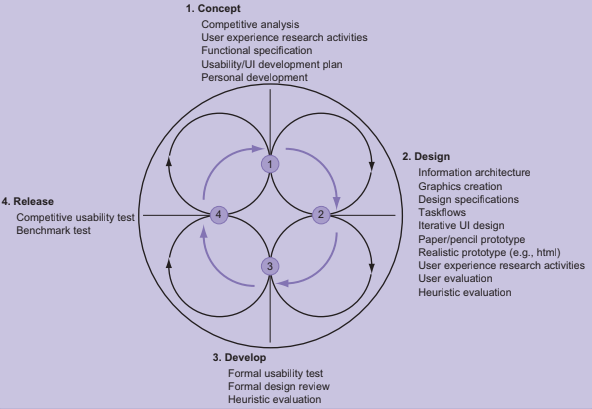
The Product Lifecycle is a model that describes the stages a product goes through from initial development of the product and all the way to the end of marketing/deploying the final version. Chapter 1 of Understanding Your Users explains that the selection of a methodology must be driven by where the product currently lives in its development. Throughout the product lifecycle, there are a plethora of different techniques, processes and methods that help ensure that the end product is focused on the user. The book also illustrates an ideal life cycle which includes 4 primary stages: Concept, Design, Develop and Release.
Stage 1: Concept
- This is the beginning of every product. During this phase, there is no product and the designer/researcher is trying to figure out the primary goals. This is the perfect time to build personas as well as get out and conduct interviews/field studies. All of this preparation is to ensure that what gets built is for the consumer.
Stage 2: Design
- Once there is a general notion to what the designer wants to create, you can now begin sketching. During this stage, many designers will use methods such as Card Sorting to figure out information architecture or even build low-fidelity prototypes to see if the flow makes sense.
Stage 3: Develop
- Once a draft has been completed, it is now time for the engineers to step in and build the product! Many designers will choose to perform usability tests and review their designs during this stage in order to ensure that the concept matches up with the real product.
Stage 4: Release
- Once everything has been approved, the last step to a product life cycle is to make it live! The product can now be tested with a real audience. Many tests such as surveys, interviews and usability tests can be conducted to see how it’s being used in a real environment.
After that, the cycle repeats for the next stage of development.
 Grow with Gao
Leave a comment