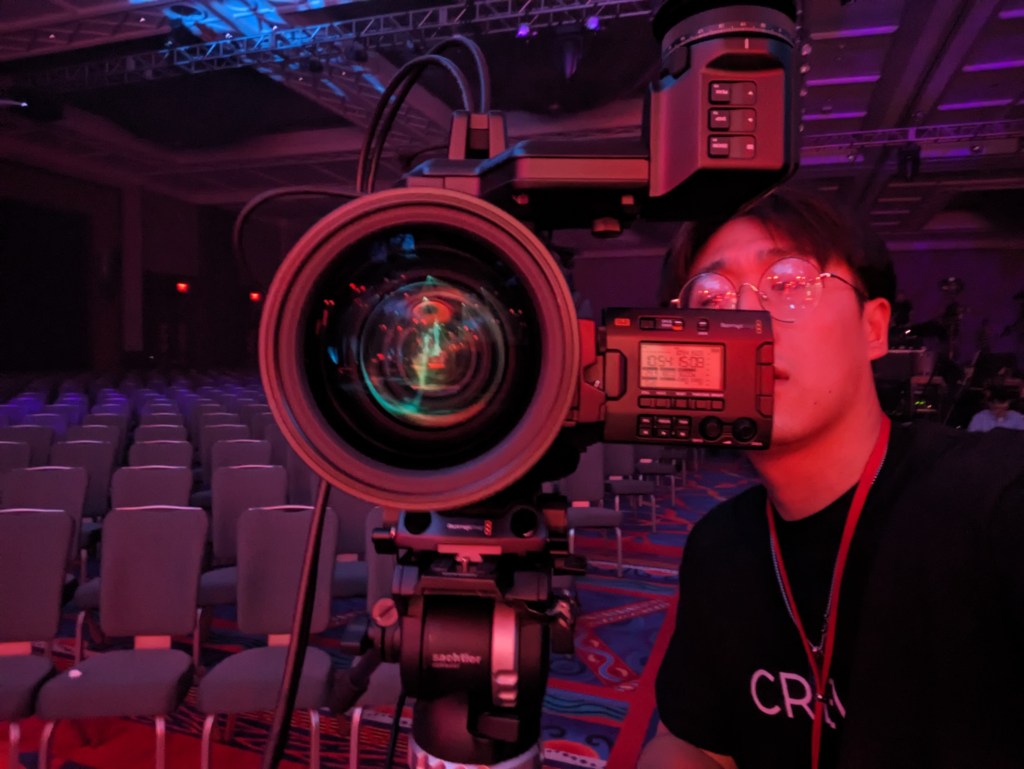
As I continue building upon my design journey, I can finally work on a project that involves both video and audio. This week, I worked on many pre-production steps from script writing to overall storyboarding. I drew a lot of inspiration from some of my favorite films in the past: Parasite, Everything Everywhere All at Once and Beef. Before shooting any video, it’s best to develop a pre-production plan to ensure that we go onto a film set with a clear path in mind to avoid confusion and to develop a great piece of work.
Reading & Writing
The Bare Bones Camera Course for Film and Video
Chapter 1 of this book was a great refresher of the basics. The creation of the Camera, the science behind how movie cameras even record, and the common terminology that comes with film and video such as Exposure, Color Temperature, ISO (International Standards Organization), and so much more are covered in this chapter. My favorite piece of information that the author shared in this chapter is when Tom Schroeppel explains what an aperture is. The aperture is just the common name for the hole at the center of the lens that hits the film or CCD chip. As someone who started filmmaking as a young teenager, this chapter provided a great reminder to the many intricacies and terms that go along with making a movie.
Chapter 2 of the Bare Bones Camera Course primarily focused on Composition. In filmmaking, the composition of a shot matters greatly in making a film entertaining and appealing. There are several “rules” that are commonly followed such as the Rule of Thirds, Leading Lines and finding balance within a shot. Everyone in filmmaking gravitates to a favorite element in composition in my experience. For example, I love playing with different angles that aren’t commonly seen by getting low or high and using various mm lengths.
Chapter 5 of the book is all about Camera Movement. Having steady camera movement is super important in most cases as it can be distracting if shakiness is not originally meant to be in the shot. Different movements also have different meanings. For examples, Zooming out usually reveals new info while zooming in can direct the audience’s attention to something in the shot.
Chapter 6 reminds us all of the definition of a montage. A montage is a series of related shots used to condense time or distance, set a mood, or summarize info. Montages usually include a showcase of different types of shots and sometimes even Dutch Tilts!
Video Pre-Production Planning Check-List – 15 Steps to a Successful Project
In this article, by Jacob Trussel, he reminds us all of the importance of pre-production planning and provides a cohesive checklist. The first step to any successful project is to define your goals. Without proper goals, the purpose of a project can get lost quickly when moving on to the production phase. My favorite part of the process is production as that’s where I can really get hands-on experience on a project.
Learn What is a Storyboard and How to Use it to Make Better Videos
This article goes into the ins and outs of storyboarding. One of the most important steps to pre-production is Storyboarding as it gives a chance for the filmmakers to sketch various scenes and visualize what the movie might look like. Storyboards are a great tool for communication and saves time and money. It’s important to remember that you don’t have to go into a whole lot of detail in storyboards as this is only meant to be a rough sketch.
Research
Parasite Movie:
Start at: 1:19
The shot is of a street cleaner blowing dust everywhere. However, the shot frames it within a window resulting in more of an interesting shot. There are 3 objects in the frame that are all well balanced. The socks hanging to dry on the left, the window, and the man cleaning outside.
Beef:
Start at: 0:12
This shot expertly begins on a CU of Steven Yeun’s face singing brightly. At the climax, the camera physically moves back and zooms out, revealing a lot more information about the surroundings. I personally enjoy this shot because the camera shifts from a CU to a Wide angle of the scene seamlessly.
EEAAO:
Although this scene may seem simple to shoot at first, I think the way the shots are composed are extremely well. Considering that there is no audible dialogue, it evokes so much emotion for camera shots and added post text.
In this scene, Joy and Evelyn have turned into rocks as they continue to discuss the complexity of their relationship.
An aspect I love about this scene is that it zooms out enough to use the sky as a backdrop for text while also including the beautiful landscape in the lower half of the shot.
Create
This week, I worked on developing a storyboard for the upcoming video montage, taking photos for a visual composition scavenger hunt, as well as creating a concept/script for next week’s montage.
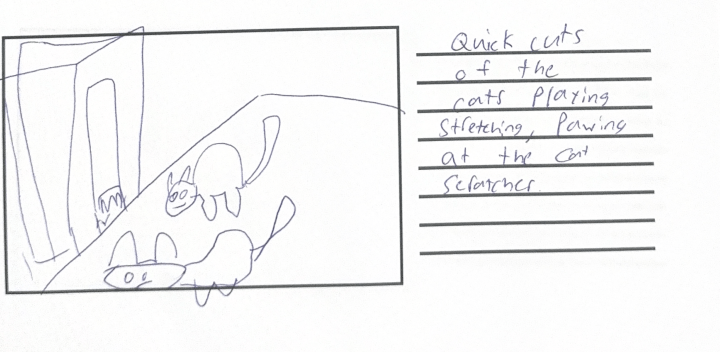
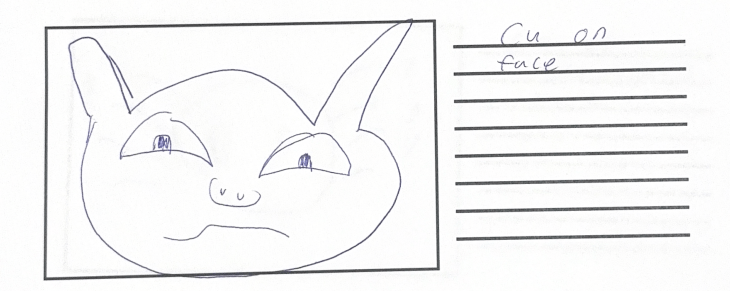
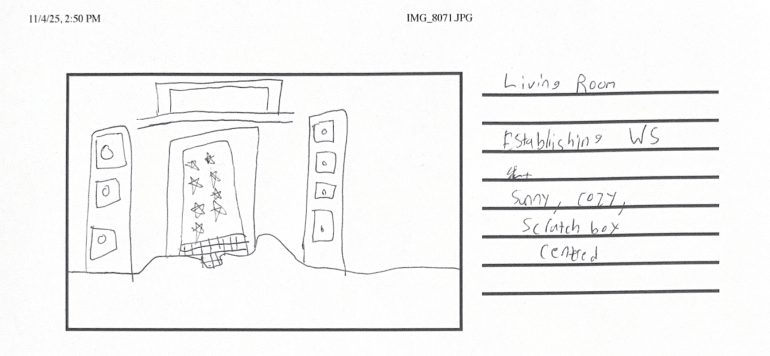
Developing a video montage for next week’s production phase takes pre-planning! For this project, I wanted to highlight my two cats by creating a montage of them using their favorite cat scratcher, which coincidentally looks like a 3d model of a famous painting. Throughout the planning document, I included details such as the objective of the piece, summary of the storyline, as well as how long I believe the piece will be. I also logged a rough script that included potential sound effects (SFX) as well as a shot list of ideas that could be interesting to capture visually. Once the script was settled, I worked on storyboarding a few of the shots I had described in words into a “very” rough sketch of the shots I planned on taking.

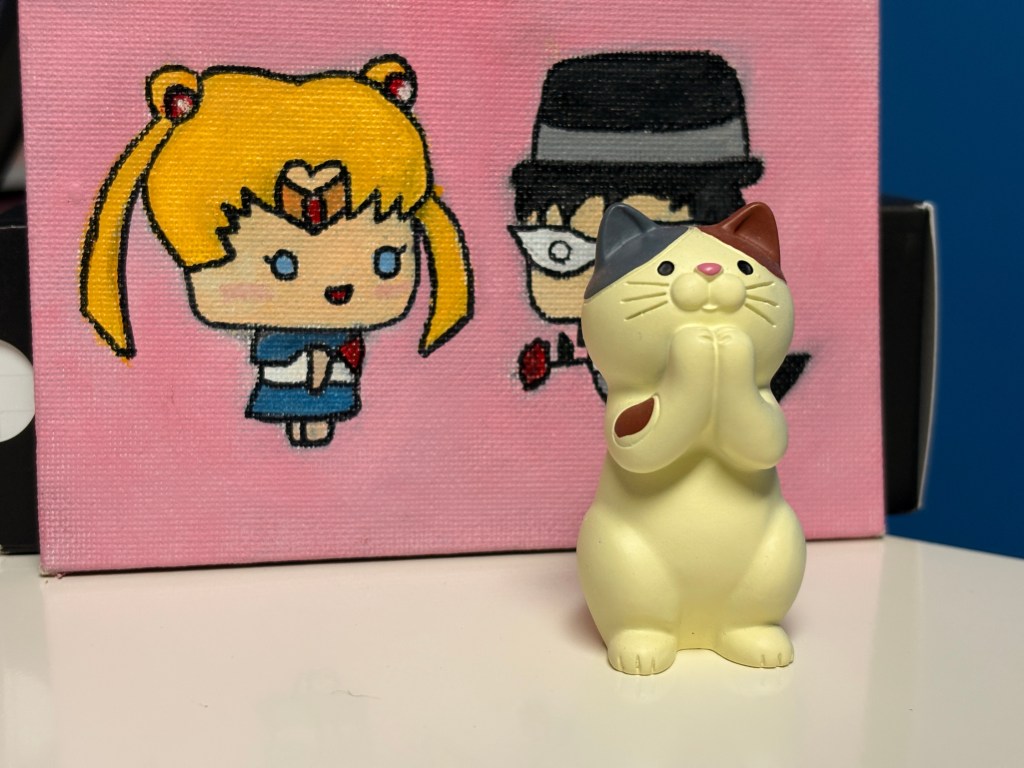
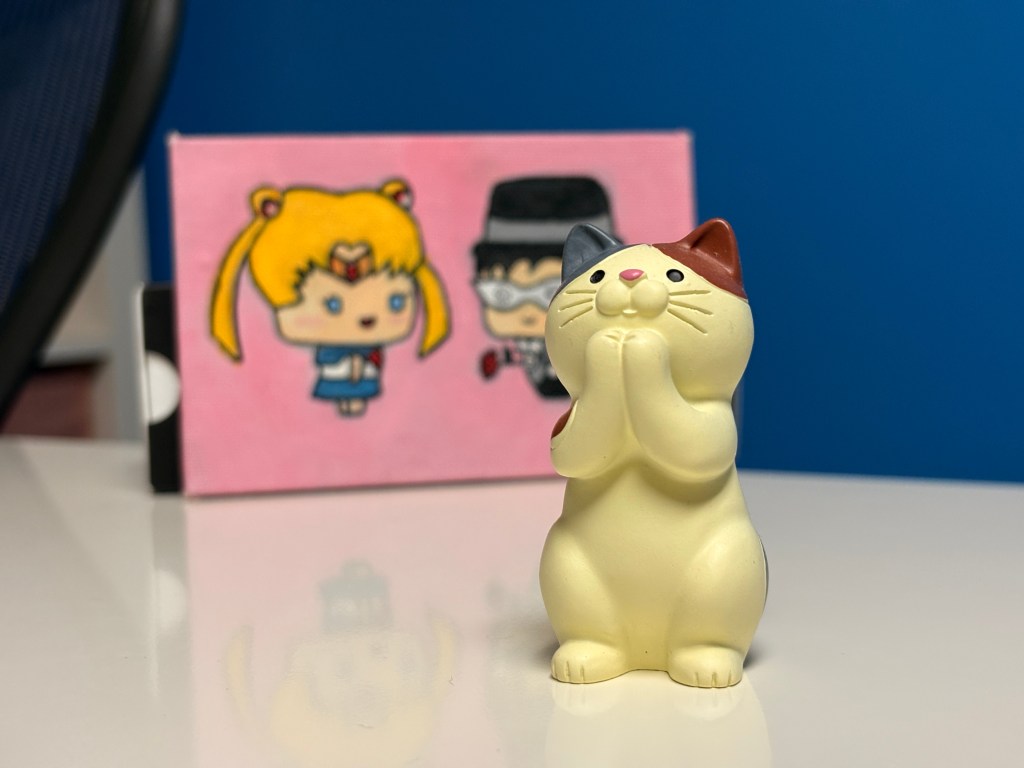
The visual composition scavenger hunt involved taking photos instead of video. The list included various prompts where I had to demonstrate my knowledge and understanding of different composition rules such as Leading Lines, Perspective, Shot Framing and much more. To complete this task, I traversed throughout my home taking photos of different objects to showcase my knowledge of the subject. The scavenger hunt was a great reminder of the many ways to present a subject and take a photo in multiple ways. Although something might look relatively “normal” at first, there are so many things you can experiment with in a camera to make a shot look more interesting.
 Grow with Gao
Leave a comment